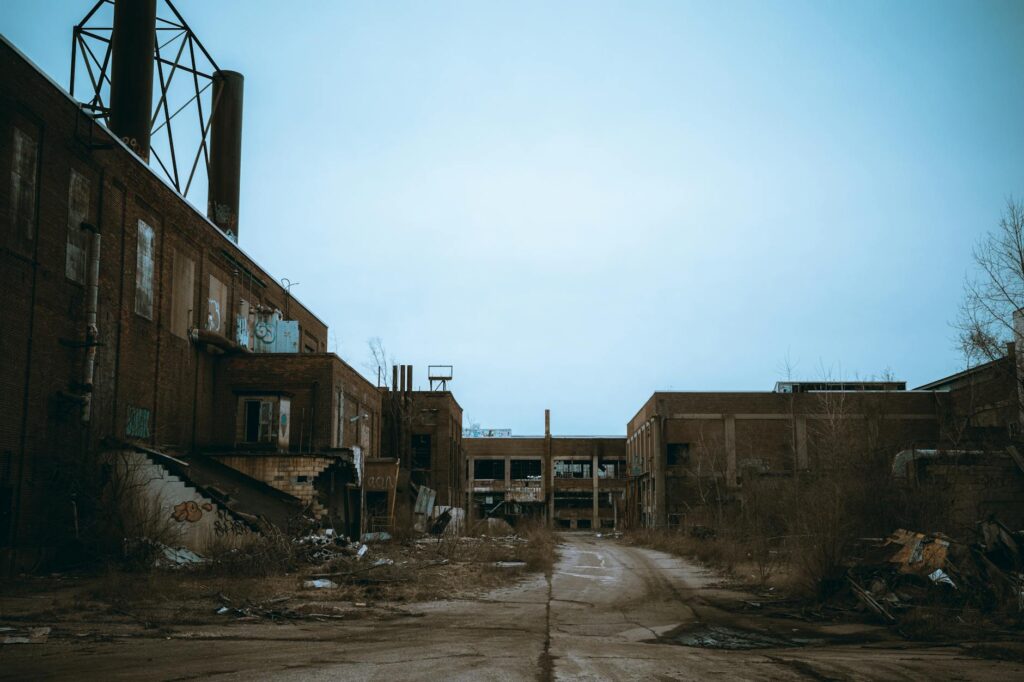
Pale Industries: A European Guide to Their Rise
Pale industries are the quiet giants of Europe’s industrial past, the sectors that once powered economies but have since faded, leaving behind a complex legacy. Think of the sprawling, often disused, factories of the North of England, the shuttered coal mines of the Ruhr Valley, or the once-thriving textile mills of Northern France. These aren’t just historical footnotes; they are tangible landscapes shaping communities and economies today. This article delves into what constitutes these pale industries from a UK and European perspective, their impact, and the ongoing efforts towards regeneration.
Table of Contents
What Exactly Are Pale Industries?
Pale industries refer to sectors that were once dominant but have significantly declined or disappeared due to technological advancements, globalisation, shifts in consumer demand, or resource depletion. From a UK and European viewpoint, this primarily encompasses heavy industries like coal mining, steel production, shipbuilding, and traditional manufacturing (textiles, heavy machinery). These sectors often left behind substantial physical infrastructure and a deep-rooted cultural identity in the regions where they thrived. They are ‘pale’ not in terms of their former vibrancy, but their diminished presence and impact today.
Historical Context: UK and Europe’s Industrial Heartlands
The UK, particularly regions like the North of England, the Midlands, and South Wales, was a crucible of the Industrial Revolution. Similarly, continental Europe saw massive industrial growth in areas like the Ruhr Area in Germany, Northern France, Belgium, and parts of Italy. For decades, these pale industries were the backbone of national economies, providing mass employment and driving innovation. However, the latter half of the 20th century brought seismic shifts. The decline of coal, the restructuring of steel, and the offshoring of manufacturing led to widespread deindustrialisation.
Consider the UK’s coal mining industry, which employed over a million people at its peak. By the early 2000s, it was virtually extinct. The same narrative plays out across Europe: Germany’s Ruhr Area, once the powerhouse of steel and coal, has had to reinvent itself significantly. The impact was profound, leading to high unemployment and social disruption in what became known as ‘rust belts’.
[IMAGE alt=”Former industrial skyline in Europe with abandoned factories.” caption=”The lingering presence of pale industries is evident in many European cityscapes.”]
🎬 Related Video
📹 pale industries — Watch on YouTube
The Economic and Social Impact of Pale Industries
The legacy of pale industries is complex. Economically, their decline often resulted in a significant loss of jobs, a shrinking tax base, and a dependency on state support or newer, less stable industries. This can create a ripple effect, impacting local businesses, public services, and overall economic vitality. The skills developed in these industries, while valuable, may not always be transferable to emerging sectors, leading to a skills gap.
Socially, the impact is equally profound. These industries often fostered strong community identities, built around shared work and local pride. Their closure can lead to a loss of this identity, increased social problems, and a sense of abandonment. The psychological impact of living in a town defined by its industrial past, now in decline, is significant.
The European Commission has highlighted that regions heavily reliant on former industrial sectors often face higher rates of unemployment and lower levels of educational attainment. For instance, data from the 2022 Eurostat report indicated that former industrial regions in Eastern Europe experienced unemployment rates 3-5% higher than the EU average.
Challenges in Revitalising Pale Industries
Revitalising areas shaped by pale industries is fraught with challenges. One primary hurdle is the physical legacy: vast, often contaminated industrial sites requiring expensive remediation. Think of the former chemical works in parts of the UK or old steel mills in Belgium. The sheer scale of these sites can be daunting.
Another challenge is overcoming the ingrained perception of decline. Communities and potential investors might view these areas as having limited future prospects. Attracting new businesses requires significant investment in infrastructure, training, and marketing. Also, the skills base needs to be adapted. While traditional craftsmanship might be preserved as heritage, new economic drivers often require digital literacy and different technical expertise.
Finally, the environmental legacy of heavy industry can be a significant barrier. Contaminated land, derelict buildings, and the need for ecological restoration all add complexity and cost to regeneration efforts. For example, former mining sites can present risks related to subsidence and water pollution.
Successful Regeneration Examples in Europe
Despite the challenges, many European regions have demonstrated remarkable success in transforming their industrial heritage. One of the most cited examples is the Zollverein Coal Mine Industrial Complex in Essen, Germany. This UNESCO World Heritage site, once a massive coal mine, has been transformed into a cultural hub, housing museums, performance spaces, and design centres. It successfully integrated its industrial heritage into a new economic model focused on culture and tourism.
In the UK, the Baltic Centre for Contemporary Art in Gateshead, housed in a former flour mill on the River Tyne, is another excellent example. It transformed a derelict industrial building into a vibrant cultural landmark, contributing to the regeneration of the surrounding area.
Another approach involves repurposing industrial infrastructure. The High Line in New York, though not European, offers a blueprint for converting old industrial structures (an elevated railway line) into public green spaces, inspiring similar projects in cities like Rotterdam.
- Preserves historical and cultural heritage.
- Creates new jobs in tourism, culture, and service sectors.
- Transforms derelict spaces into community assets.
- Attracts investment and boosts local economies.
- Enhances quality of life for residents.
- High remediation and development costs.
- Risk of gentrification displacing long-term residents.
- Skills mismatch between old industries and new jobs.
- Environmental clean-up can be extensive and slow.
- Potential for projects to become white elephants if not well-planned.
The Future of Pale Industries: Beyond Decline
The future of areas associated with pale industries isn’t about erasing the past but about building upon it. This involves a strategic blend of heritage preservation, economic diversification, and community engagement. For instance, many former mining towns are exploring geothermal energy or other green technologies that can leverage the underground infrastructure or the land previously used for industry.
Digitalisation also offers new avenues. While traditional manufacturing might have declined, advanced manufacturing, robotics, and AI can be integrated into revitalised industrial spaces. The key is to foster innovation and provide the necessary training for the local workforce. Universities and technical colleges play a vital role here, partnering with local authorities and businesses to reskill and upskill residents.
Ultimately, the narrative of pale industries is shifting from one of decline to one of reinvention. By embracing their unique heritage and strategically investing in new opportunities, these regions can forge a vibrant future. The lessons learned from the industrial past, combined with forward-thinking policies, are paving the way for sustainable growth.
[IMAGE alt=”Community garden established on former industrial land in Europe.” caption=”Repurposing land from pale industries for green spaces and community projects.”]
Frequently Asked Questions
What is a pale industry?
A pale industry is a sector that was once dominant but has significantly declined or disappeared due to technological changes, globalisation, or shifting market demands. Examples include coal mining, steel production, and traditional textile manufacturing, particularly prevalent in the UK and continental Europe’s historical industrial heartlands.
Why are they called ‘pale’ industries?
The term ‘pale’ refers to their diminished present-day presence and economic impact, contrasting with their once vibrant and dominant role. It signifies a fading or reduced significance, not necessarily a lack of historical importance or ongoing legacy.
What are examples of pale industries in Europe?
Key examples include coal mining in the Ruhr Area (Germany) and South Wales (UK), steel production in Northern France and Belgium, shipbuilding in various coastal regions, and textile manufacturing in Lancashire (UK) and parts of Italy. These were once foundational to their respective economies.
How do regions deal with the legacy of pale industries?
Regions often deal with this legacy through economic regeneration, focusing on diversifying local economies, attracting new industries, investing in skills training, and repurposing old industrial sites for cultural, residential, or green spaces. Heritage tourism is also a significant strategy.
What is the future outlook for these areas?
The future outlook is one of reinvention. By using their industrial heritage, embracing new technologies like advanced manufacturing and green energy, and fostering community-led initiatives, these regions can achieve sustainable economic growth and social revitalisation.
Ready to Explore Europe’s Industrial Heritage?
Understanding pale industries is essential for grasping the economic and social fabric of much of the UK and Europe. These once-mighty sectors have left an indelible mark, presenting both challenges and opportunities for regeneration. By learning from successful case studies and focusing on diversification and community engagement, regions can successfully transition and build prosperous futures. If you’re interested in the transformation of industrial landscapes, exploring local heritage sites or regional development projects offers a fascinating glimpse into this ongoing evolution.